


My Night at Maud’s (1969; Eric Rohmer)
GRADE: B+
By Mike Dub
In describing Eric Rohmer’s My Night at Maud’s, the third and probably best-known of his Moral Tales, it is tempting to use terms that might sound somewhat condescending, or make the film seem trivial. “Novel,” “refreshing,” even “daring” – they are all words that could dangerously imply that Rohmer relies on a gimmicky approach to tell this personal story of love and temptation. However, the key to Rohmer’s films, it seems to me, is that he doesn’t seem to see his approach as novel. The sensibility of this film, in particular, seems quite a natural, even commonsense approach for a director who views cinema as an extension of literature, and philosophy an extension of the soul.
The film follows Christmas week in the life of Jean-Louis (played by Jean-Louis Trintignant), a devout Catholic and grossly intellectual engineer in his mid-thirties. Like the narrators of previous Moral Tales, Jean-Louis is in love with a stranger, a beautiful blonde he makes eye contact with at church. He doesn’t speak to her, but he does stalkishly follow her home one evening, realizing, “I suddenly knew, without a doubt, that Francoise would be my wife.”
Later he meets an old friend, Vidal (Antoine Vitez) who, after a hefty conversation about statistics and Pascal, convinces Jean-Louis to have dinner with him and his “friend,” Maud (Francoise Fabian) – he is afraid that if he goes alone, they will make love “out of boredom.” Jean-Louis goes, putting up just enough of a fight to save face before being convinced.

The centerpiece of the film, as suggested by the title, is the evening at Maud’s, which takes up about half of the film. In his review of Suzanne’s Career, Daniel Barnes noted that visual acuity is not Rohmer’s strong suit. However, with a bigger budget and a more professional crew, the intimacy of the apartment setting relieves him of a certain sense of obligation to visual technique. In this film, the editing plays a more impactful role, as Rohmer’s camera alternates hanging onto single participants, capturing their faces as they try to distill meaning from their dialogue.
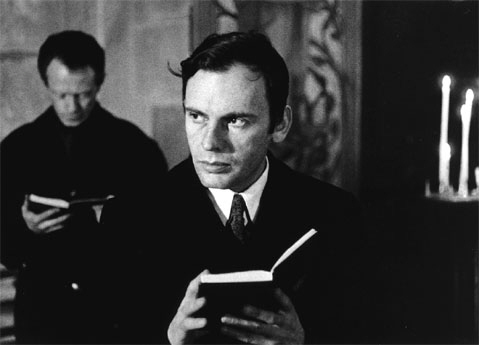
Through all of this, Rohmer stays respectfully non-judgmental of his characters. My Night at Maud’s is an odd type of morality play: it is about its characters’ decisions, but it has nothing to do with codifying right and wrong. “What counts for me,” Jean-Louis says to Maud as he lies draped across her bed, fully clothed, “is not one deed, but an entire life. Every life is made of whole cloth.” Their night together will become just another stitch in that cloth, a single moment in which experience was both gained and lost.
